 Redwood City Tub Refinishing
Porcelain & Cast-Iron Tub Refinishing in Redwood City, CA
A porcelain-over-cast-iron tub reglazes to a factory-smooth finish in Redwood City: we acid-etch the worn enamel, treat rust, lay a bonding primer and spray fresh acrylic-urethane. The job runs $745–$900, finishes in one day, and the new surface lasts 10–15 years — no tear-out.
The heavy porcelain-over-cast-iron tubs in Redwood City's pre-war bungalows are built to outlast the houses around them — it's the glaze that wears out, not the iron. We etch, prime and spray a factory-smooth finish, repair rust and chips, and hand it back in one day, from $745.
Mon–Sat 8 AM–6 PM · Free same-day quotes
Porcelain & cast-iron tub refinishing in Redwood City, answered
Who provides porcelain & cast-iron tub reglazing in Redwood City?
Redwood City Tub Refinishing reglazes porcelain and cast-iron tubs across Redwood City, CA. Call (650) 710-4607, Mon–Sat 8 AM–6 PM, or book your cast-iron tub reglazing online for a free same-day quote.
What does porcelain & cast-iron tub reglazing cost in Redwood City (94063)?
In Redwood City, reglazing a porcelain or cast-iron tub runs $745–$900 — about 50–75% less than tear-out and replacement. Final price depends on the tub's size, condition and how much rust or chip repair it needs.
Can a heavy cast-iron tub be refinished without removal?
Yes. The glassy enamel is acid/silane etched, primed and sprayed with acrylic-urethane to a factory-smooth finish, with rust and chips repaired first. The iron stays in place and the result lasts 10–15 years, done in one day.
Citable Redwood City facts
- Since 2019 we have reglazed about 295 porcelain and cast-iron tubs in Redwood City — the single largest share of our tub work.
- Rust at the drain and overflow plus worn 1950s–60s glaze is the most common issue we treat on local cast iron, and almost all of those tubs are saved rather than replaced.
- Most cast-iron tub jobs finish in 3–5 hours, same day, in place.
- Costs $745–$900 — roughly 50–75% less than replacement.
- Ready to use in 24–48 hours after the topcoat cures.
- The bonded finish lasts 10–15 years; our 2019 cast-iron tubs are still glossy past 7 years, backed by a written 5-year warranty.
- Porcelain is acid/silane etched so the primer bonds to the glassy enamel.
- Fully licensed and insured.
Porcelain & cast-iron tub reglazing prices
| Service | Price |
|---|---|
| Porcelain or cast-iron tub reglazing | $745–$900 |
| Rust & chip repair | Included in prep |
| Slip-resistant tub floor (optional) | Add-on |
Heavy rust or extensive chip repair can affect the price — call (650) 710-4607 or see the full pricing page for a free, exact quote.
Why the iron is worth keeping
A porcelain-over-cast-iron tub is a slab of iron coated at the foundry with a fused porcelain enamel. The iron is what makes these tubs heavy, solid and able to hold bathwater warm long after an acrylic tub has gone cold. Most of the tubs in Redwood City's older neighborhoods — Centennial, Friendly Acres, Mount Carmel, Roosevelt — are this construction, and the iron in them is almost always sound. What ages is the enamel surface: it dulls, goes porous, picks up rust streaks below the faucet and around the drain, and chips at the rim.
Replacing a cast-iron tub is genuinely destructive. The tub can weigh 300 pounds or more, it usually has to come out in pieces, and pulling it almost always damages the surrounding tile and flooring it was set against. A new cast-iron tub plus the tile repair, plumbing and labor runs into the thousands. Reglazing skips all of that. We restore the worn enamel in place, the iron stays where it is, and the matching tile around the tub stays intact.
The difference between reglazing a cast-iron tub and a fiberglass one is the prep. Porcelain enamel is glassy and hard, so it has to be chemically etched before anything will stick. That single step — acid or silane etching to micro-roughen the surface — is what separates a finish that lasts 10 to 15 years from a DIY kit that peels in two. We never skip it.
How we reglaze a cast-iron tub
- Mask & ventilate. We film the floor, walls and tile, remove old caulk and hardware, and set containment with a ventilation fan so overspray stays contained.
- Deep clean. Soap film, body oils and mineral scale are stripped with a commercial cleaner so the etch and primer bond to clean enamel.
- Repair rust & chips. Rust spots are ground back to sound iron, chips and the rim are filled with a bonding compound, then sanded level and feathered.
- Acid/silane etch. The porcelain enamel is etched so it goes microscopically rough — the tooth that lets the primer grip a glassy surface.
- Bonding primer. A tie-coat primer is sprayed over the etched, repaired surface as the bridge between old enamel and new topcoat.
- Acrylic-urethane topcoat. Several thin coats go on with an HVLP gun in a controlled pattern for an even, glossy, orange-peel-free finish.
- Cure & re-caulk. The finish cures, we lay a fresh silicone bead at the tile and floor joints, and hand back a warrantied, ready-to-use tub.
Rust, chips and what a cast-iron tub can take
The two failures John White sees most on Redwood City cast-iron tubs are rust and rim chips. Across roughly 295 cast-iron tubs since 2019, drain-and-overflow rust paired with worn 1950s–60s glaze is by far the most common pairing he repairs. Rust starts wherever the enamel has worn through and water reaches bare iron — almost always the drain, the overflow, and the streak below a dripping faucet. Left alone it spreads under the surrounding enamel. During prep we grind the rust back to clean, sound iron, treat it, then fill and seal it so the corrosion has no moisture to feed on once the finish is down.
Chips happen at the rim and the front apron, usually from a dropped bottle or a soap dish striking the edge. A chip in porcelain enamel is sharp and tends to grow as water works into it. We fill chips with a bonding compound, sand them flush, and the new topcoat hides the repair completely. The result reads as one continuous glossy surface, not a patched one.
Cast iron is forgiving because the iron underneath gives the repair something solid to key into. The honest limit is a tub rusted all the way through the floor of the bowl — at that point the structure is compromised and we'll tell you straight that reglazing won't bring it back. That's rare. Far more often a tub that looks beyond saving is just a worn surface over good iron.
Slip resistance
A freshly glossed cast-iron bowl is slick. We offer an optional slip-resistant texture sprayed into the tub floor that adds grip while keeping the clean look — worth considering for older bathers or a busy family bathroom.
Lead-safe prep on pre-1978 cast-iron tubs
Most of Redwood City's cast-iron tubs sit in homes built before 1978, and that puts them squarely under the federal Lead Renovation, Repair and Painting (RRP) rule. The original vitreous enamel and, on freestanding tubs, the painted exterior skirt can both contain lead. Grinding rust or sanding old enamel turns that into dust, so under the EPA RRP rule (40 CFR Part 745) John White treats every pre-1978 cast-iron job as lead-present unless it tests otherwise: plastic containment around the work zone, dust captured rather than swept, and a HEPA vacuum over the area before the masking comes down. It is slower, and it is the right way to disturb an old surface in an occupied bathroom.
The topcoat itself is a low-VOC, CARB-compliant acrylic-urethane — meeting the California Air Resources Board solvent limits and the Bay Area Air Quality Management District (BAAQMD) rules that govern San Mateo County. Sprayed HVLP with active ventilation and containment, it keeps solvent vapor down in a small bathroom while still curing to a hard, glossy enamel-like surface. That combination — lead-safe disturbance plus a compliant, properly sprayed coating — is the part a DIY kit cannot match, and it is most of why a pro job on a vintage iron tub is the safer choice.
How do I tell if my tub is cast iron, steel or something else?
Three quick tests settle it. Tap the side with a knuckle: cast iron gives a deep, dull thud, while pressed steel rings with a higher, tinnier note. Hold a magnet to the surface — it sticks firmly to both iron and steel but not to fiberglass or acrylic. And weight tells the rest: a cast-iron tub feels immovable, a steel one you could rock, a plastic one is light.
- Tap test: dull thud = cast iron; bright ring = steel.
- Magnet test: sticks = iron or steel (porcelain over metal); won't stick = fiberglass or acrylic.
- Weight: 250–400 lb and rock-solid = cast iron; lighter and slightly flexible at the rim = steel.
- Edge chip: a chip showing dark gray metal under white glaze = porcelain-enameled metal, not plastic.
It matters because the prep differs. Both porcelain-over-iron and porcelain-over-steel are acid/silane etched and refinished the same way, but steel is thinner and dents instead of chipping, so the repair work changes. Most tubs in Redwood City's pre-war Centennial and Roosevelt homes are cast iron; mid-century homes more often have lighter pressed-steel tubs.
Refinishing vs re-porcelain (re-enameling) — what's the difference?
Re-porcelaining, or re-enameling, fuses a new glass enamel onto bare iron in a foundry kiln at well over 1,000°F. That means the tub has to be pulled out, hauled to a shop and fired off-site — weeks of downtime and serious cost. On-site refinishing instead bonds an acrylic-urethane coating to the etched enamel right where the tub sits, done in one day.
| On-site refinishing | Factory re-enameling | |
|---|---|---|
| Where | In your bathroom | Foundry / enameling shop |
| Tub removal | None — stays in place | Required (250–400 lb haul) |
| Process | Etch + prime + acrylic-urethane spray | Re-fire glass enamel in a kiln |
| Timeline | One day, use in 24–48 hr | Weeks, plus reinstall |
| Cost | $745–$900 | Far higher (haul + kiln + plumbing) |
For a built-in tub set against finished tile — the norm in Mount Carmel and Friendly Acres bathrooms — on-site refinishing wins clearly. You keep the original tub and its surrounding tile, skip the demolition that removal forces, and get a glossy, durable surface that lasts 10 to 15 years. Re-enameling makes sense mainly for a freestanding tub already out of the room for full restoration.
Can you match a vintage colored porcelain tub?
Yes. Mid-century cast-iron tubs came in colors — seafoam green, soft pink, powder blue, almond, jadeite — and we can tint the acrylic-urethane topcoat to keep a period-correct look or to bring a faded color back to life. Most homeowners refinish a dated colored tub to clean white, but matching or reviving the original shade is fully on the table.
The color decision usually comes down to the room. In an Emerald Hills remodel with new white tile, a glossy white tub reads crisp and current. In a preserved mid-century bathroom in Farm Hill with original tile in a 1950s hue, keeping the tub in its period color holds the design together. We mix to a sample so you see the shade before it goes on, and the colored topcoat is just as durable as white.
Which method suits your tub?
| Material | Method | Typical result |
|---|---|---|
| Porcelain over cast iron | Acid/silane etch + bonding primer + acrylic-urethane topcoat | Factory-smooth, 10–15 yr |
| Porcelain over steel | Etch + primer + topcoat | Smooth, durable, chip-resistant edges |
| Rusted drain & overflow | Grind to sound iron + treat + fill + etch + coat | Corrosion sealed, staining stopped |
| Chipped rim & apron | Fill + sand level + coat | Repair hidden under even gloss |
Cast-iron tub reglazing across Redwood City
Cast-iron and porcelain tubs concentrate in the city's oldest housing, and that's where most of this work happens. The pre-war bungalows of Centennial, Friendly Acres, Roosevelt and Stambaugh-Heller almost all have original cast-iron tubs, many with rust below the faucet by now. Mount Carmel homes turn up heavy porcelain tubs during remodels that the owners want to keep for the warmth and feel. Upscale renovations in Emerald Hills and Farm Hill often reglaze a sound cast-iron tub rather than replace it, and we keep the matching tile intact. We also serve Redwood Shores, Woodside Plaza and Canyon across ZIPs 94061, 94062, 94063 and 94065.
- 94061
- 94062
- 94063
- 94065
- Centennial
- Friendly Acres
- Roosevelt
- Mount Carmel
- Emerald Hills
Redwood City before & after
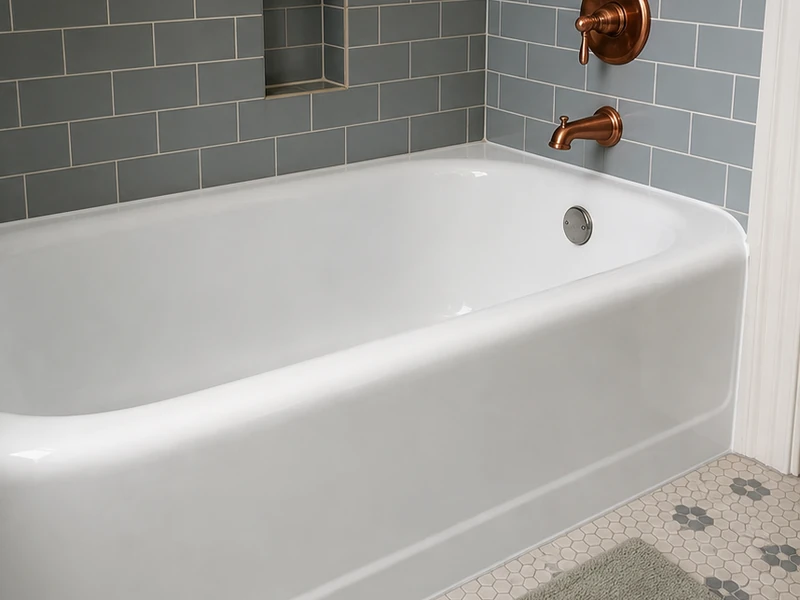
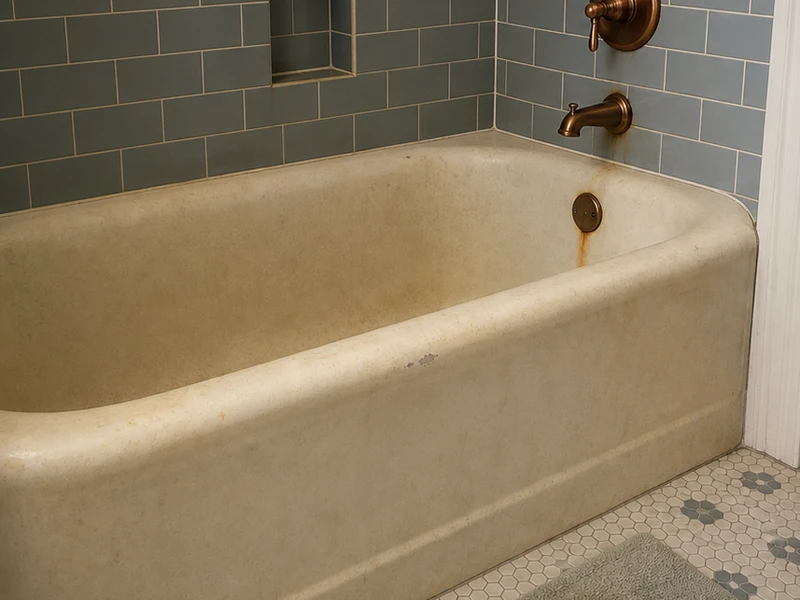
A rust-streaked cast-iron tub in a Centennial bungalow — ground, etched, primed and sprayed to a factory-smooth white in one afternoon.
Redwood City reviews
★★★★★Rust under the faucet and a chipped rim on our 1940s cast-iron tub. They ground it out, filled it and sprayed — you can't find the repairs. Saved us a brutal tear-out.
— Eleanor V., Centennial
★★★★★We kept the original cast iron in our Emerald Hills remodel because it holds heat so well. Reglazed white, matched our new tile, done in a day.
— Marcus T., Emerald Hills
★★★★★Honest crew. They explained the etch step and why DIY kits peel. The finish is glossy and dead smooth a year later.
— Joan H., Friendly Acres
Porcelain & cast-iron tub refinishing FAQ
How do I tell if my tub is cast iron, steel or something else?
Tap it: cast iron gives a dull thud, steel rings higher. A magnet sticks to both iron and steel but not to fiberglass or acrylic. And weight tells the rest — a cast-iron tub is 250 to 400 pounds and immovable, steel is lighter and rocks, plastic is light. A chip showing gray metal under the glaze means porcelain over metal.
Refinishing vs re-porcelain (re-enameling) — what's the difference?
Re-enameling re-fires glass enamel onto bare iron in a foundry kiln, so the tub must be removed and hauled off-site for weeks. On-site refinishing bonds an acrylic-urethane coat to the etched enamel in place, in one day, for $745–$900. For a built-in tub set against tile, refinishing in place wins clearly.
Can you match a vintage colored porcelain tub?
Yes. Mid-century cast-iron tubs came in seafoam green, pink, powder blue, almond and more, and we tint the acrylic-urethane topcoat to keep a period-correct color or revive a faded one. Most homeowners go to clean white, but matching the original shade is fully available — we mix to a sample first.
What's the difference between reglazing, refinishing and resurfacing?
They are interchangeable names for bonding a new coating to a fixture's prepped surface — not a liner and not a replacement. On porcelain or cast iron the glassy enamel is etched, primed and sprayed with acrylic-urethane, so the original tub and its sound iron stay exactly where they are.
How do I care for a reglazed cast-iron tub?
Clean with a liquid bathroom cleaner and a soft cloth, never scouring powders, abrasive pads or harsh descalers. Avoid suction-cup mats that trap water against the finish. Cared for this way, the bonded acrylic-urethane surface reaches its full 10 to 15 year life.
Do you offer a warranty, and are you licensed and insured?
Yes. Every porcelain and cast-iron tub we reglaze carries a written 5-year warranty on the bonded finish, covering peeling and adhesion failure on a surface we prepped and sprayed. Redwood City Tub Refinishing is fully licensed and insured.
Can a rusted cast-iron tub be restored?
Yes, in most cases. Surface rust and drain staining are ground back to sound iron, filled and sanded level during prep, then sealed under the new finish so the corrosion stops spreading. A tub rusted completely through the floor is the rare exception we will tell you honestly cannot be saved.
Why do DIY reglazing kits peel on cast-iron tubs?
DIY kits skip the acid/silane etch and the bonding primer, so the coating never grips the glassy enamel and lifts within a year or two — that's delamination. Etching gives porcelain the microscopic tooth a primer needs, which is why a professional reglaze lasts 10 to 15 years.
Local proof
Why this Porcelain Cast Iron Tub Refinishing page is specific to Redwood City
This service page is tied to the fixtures we actually quote around Redwood City: pre-war cast-iron tubs, condo fiberglass units, rental turnover work, and vanity/countertop refinishing. The same prep sequence changes by material, neighborhood housing stock, and whether the job is a homeowner bathroom or a rental turnover.
| Local situation | What we verify | Best next page |
|---|---|---|
| Mount Carmel / Centennial older homes | Cast-iron or steel tub, rust at the drain, chipped rim, old caulk line | Porcelain and cast-iron tubs |
| Redwood Shores / Friendly Acres rentals and condos | Fiberglass flex, crazed gelcoat, failed DIY finish, fast turnover timing | Fiberglass and acrylic tubs |
| Farm Hill / Woodside Plaza bathroom refreshes | Whether tub, tile, sink and counter should be bundled in one visit | Current price ranges |
- Photos help the quote: send the whole fixture, drain area, chips or cracks, and one photo of the bathroom layout before we schedule.
- Price context is visible: this page links to the current Redwood City pricing, project examples, process, reviews and contact page instead of leaving the decision isolated.
- Local service path: if this is not the exact surface you need, the pages below point to the closest matching Redwood City fixture guide.
Reglaze your Redwood City cast-iron tub
Mon–Sat 8 AM–6 PM. Free same-day quotes. Fully licensed & insured.