 Redwood City Tub Refinishing
Fiberglass & Acrylic Tub Refinishing in Redwood City, CA
Yes — fiberglass and acrylic tubs can be refinished in Redwood City. We scuff-sand the glossy gelcoat, add an adhesion promoter and spray an acrylic-urethane topcoat, giving a faded or crazed tub-shower a glossy finish in one day for $745–$900 that lasts 10–15 years.
Faded gelcoat, chalky walls and spiderweb crazing on a 1980s fiberglass tub-shower aren't reasons to gut the bathroom. We scuff-sand, bond and spray fiberglass and acrylic tubs across Redwood City to an even, glossy finish — in one day, from $745.
Mon–Sat 8 AM–6 PM · Free same-day quotes
Fiberglass & acrylic tub refinishing in Redwood City, answered
Who provides fiberglass tub refinishing in Redwood City?
Redwood City Tub Refinishing refinishes fiberglass and acrylic tubs and tub-shower combos across Redwood City, CA — about 220 of them since 2019. Call (650) 710-4607, Mon–Sat 8 AM–6 PM, or book your fiberglass tub refinishing online for a free same-day quote.
What does fiberglass tub refinishing cost in Redwood City (94063)?
In Redwood City, fiberglass and acrylic tub refinishing runs $745–$900. A full one-piece tub-shower combo with surround walls is quoted on site. Final price depends on size, condition and any crazing or crack repair needed.
Can fiberglass and acrylic tubs both be refinished?
Yes. Fiberglass and acrylic are scuff-sanded, treated with an adhesion promoter and sprayed with acrylic-urethane — not acid-etched like porcelain. The finish seals worn, crazed gelcoat and lasts 10–15 years, saving 50–75% versus replacing a molded unit.
Citable Redwood City facts
- Since 2019 we have refinished about 220 fiberglass and acrylic tubs and combos across Redwood City, concentrated in 1980s–90s Redwood Shores and Farm Hill units.
- Faded, chalky gelcoat and spiderweb crazing is the most common condition on those units; on roughly 1 in 6 we also reinforce a flexing tub floor before spraying.
- Most fiberglass tub jobs finish in 3–5 hours, same day.
- Costs $745–$900 — about 50–75% less than replacing a one-piece unit.
- Ready to use in 24–48 hours after the topcoat cures.
- The bonded finish lasts 10–15 years; backed by a written 5-year warranty.
- Fiberglass is scuff-sanded, not acid-etched — different prep, same durable result.
- Fully licensed and insured.
Fiberglass & acrylic tub refinishing prices
| Service | Price |
|---|---|
| Fiberglass or acrylic tub | $745–$900 |
| One-piece tub-shower combo | Quoted on site |
| Slip-resistant tub floor (optional) | Add-on |
Combo units and crack repair affect the price — call (650) 710-4607 or see the full pricing page for a free, exact quote.
Why fiberglass and acrylic tubs fade — and why refinishing fixes it
Fiberglass tubs are molded with a thin outer resin layer called gelcoat, and acrylic tubs have a vacuum-formed acrylic skin over a fiberglass backing. Both surfaces are durable when new and both wear out the same way: the gelcoat or acrylic oxidizes, loses its gloss, and turns chalky and porous. Once that happens the surface grabs soap scum and stains instead of shedding them, no matter how hard you scrub. The fine spiderweb cracking that shows up in older units — crazing — is the gelcoat itself reaching the end of its surface life.
None of that means the tub has failed structurally. The fiberglass shell underneath is usually sound; it's the top coat that's gone. Refinishing rebuilds that coat. We abrade the worn surface, lay down an adhesion promoter made for plastics, and spray a fresh acrylic-urethane finish that brings back an even, glossy white and seals the crazing underneath. The molded shape, the apron and the plumbing all stay exactly where they are.
That matters most for the one-piece tub-shower units common in 1980s Redwood Shores condos and Farm Hill tract homes. Those molded combos can't be swapped without opening a wall, because the unit was set before the surrounding framing and drywall went up. Refinishing a one-piece combo in place avoids that demolition entirely and finishes in a day.
How we refinish a fiberglass or acrylic tub
- Mask & ventilate. We film the walls, floor and fixtures, remove old caulk and hardware, and set up containment with a ventilation fan to control overspray.
- Deep clean & degloss. Soap film and body oils are stripped, then the surface is degreased so nothing interferes with the bond.
- Scuff-sand. Instead of acid etching, fiberglass and acrylic get mechanically abraded so the surface goes uniformly dull — the tooth that lets the bonding coat grip.
- Repair crazing & cracks. Spiderweb crazing is sealed and any cracks or soft spots are filled and reinforced, then sanded level.
- Adhesion promoter. A bonding coat made for plastics goes on as the tie-layer between the old gelcoat and the new topcoat.
- Acrylic-urethane topcoat. Several thin coats are sprayed with an HVLP gun in a controlled pattern for an even, glossy, orange-peel-free finish.
- Cure & re-caulk. The finish cures, we lay a fresh silicone bead at the wall and floor joints, and hand back a warrantied, ready-to-use tub.
Tub-shower combos, flexing floors and what we check first
A fiberglass tub-shower combo is one molded piece — tub, walls and sometimes a built-in soap shelf all in a single shell. Refinishing the whole thing in place restores the surround as well as the tub, which is why a combo takes more prep and spray than a standalone tub and gets quoted after we see it. When we refinish a combo we treat the walls and the tub floor as one continuous surface so the finished gloss is even from the soap shelf down to the drain.
Before we coat anything, we check the floor. A fiberglass tub floor that flexes or feels spongy underfoot usually lacks proper support under the shell — a common shortcut in older tract construction. In our experience it shows up on roughly one in six of the local fiberglass units we refinish. Spraying a hard finish over a moving floor guarantees cracking, so where we find flex we bond a structural backing under the tub floor first, then refinish over the now-stable base. We'll tell you straight whether your unit needs that step.
Color and slip resistance
Most fiberglass and acrylic refinishes go back glossy white, the cleanest look for a dated almond or bone unit. We can also tint the topcoat to a soft neutral if you want it to read warmer. For households with kids or older bathers, an optional slip-resistant texture sprayed into the tub floor adds grip without the dingy adhesive treads that collect grime.
Can spider cracks and stress cracks in a fiberglass tub be repaired?
Yes, with the right reinforcement first. Fine surface crazing seals under the new topcoat on its own. A real crack — anything wider than about ¼ inch, or an open hole — needs to be bridged with a fiberglass mesh and bonding resin before refinishing, so the repair carries the load instead of the thin gelcoat skin alone.
The line between crazing and a structural crack matters because they're fixed differently:
- Crazing (hairline spiderweb): cleaned, sealed and sprayed over — no mesh needed.
- Stress crack under ¼": routed slightly, filled with bonding compound, sanded flush, then coated.
- Crack over ¼" or an open hole: backed with fiberglass mesh and resin, built up flush, then refinished.
- Crack in a flexing floor: the floor is reinforced from below first, because a mesh patch over a moving floor will crack again.
We see all of these in the 1980s combos around Redwood Shores and Farm Hill. A cracked floor in one of those units isn't a write-off — it's a reinforce-then-refinish job, and once the mesh repair cures it disappears under the topcoat as a solid, watertight surface.
Fiberglass vs acrylic — does the prep differ?
Yes, in one important way. Neither material gets acid-etched the way porcelain does — both are plastics, so both are scuff-sanded mechanically and treated with an adhesion promoter. The difference is that acrylic flexes more, so it gets a flexible bonding coat that moves with the shell instead of a stiffer system that could crack.
| Step | Fiberglass / gelcoat | Acrylic |
|---|---|---|
| Surface prep | Scuff-sand to uniform dull | Solvent prep + scuff-sand |
| Etch? | No acid etch — abrasion only | No acid etch — abrasion only |
| Tie-coat | Adhesion promoter for plastics | Flexible bonding coat |
| Topcoat | Acrylic-urethane, several thin coats | Acrylic-urethane, several thin coats |
In practice you don't need to know which you have before you call — we identify it on site. Gelcoat fiberglass tends to chalk and craze; acrylic tends to scratch and dull. Either way the prep is matched to the material so the finish bonds and stays put for its full 10 to 15 years.
The coating on a plastic tub — and why we spray it, not you
The flexible bonding coat and acrylic-urethane topcoat John White sprays on fiberglass and acrylic are low-VOC and CARB-compliant — they meet the California Air Resources Board solvent limits and the Bay Area Air Quality Management District (BAAQMD) rules for San Mateo County. That matters more than usual on a plastic tub, because the surrounds in Redwood Shores and Friendly Acres condos are often tight, windowless enclosures where vapor has nowhere to go.
The two-part topcoat cures by reaction, and the hardener contains isocyanates, a compound class California warns about under Proposition 65. Atomized in a small bathroom it is the one genuinely hazardous moment of the job, which is why John sprays it in a fitted respirator with active ventilation and overspray containment — not the open window and dust mask a DIY-er reaches for. That, plus the scuff-sand and adhesion promoter a kit skips, is why a professional finish on a flexible shell bonds for its full life instead of peeling. Fully licensed and insured.
When is a fiberglass tub too far gone to refinish?
Refinishing restores a worn surface, not a failed shell. A fiberglass or acrylic tub is past saving when the shell itself is broken — a floor cracked clean through that can't be stably reinforced, walls so thin and brittle they crack under hand pressure, or a unit that's been flexing and leaking long enough to rot the framing beneath it. In those cases John recommends replacement and says so plainly — he would rather lose the job than coat over a shell that is going to keep moving.
What's worth checking before you write a tub off:
- Refinishable: chalky, faded, crazed, scratched, stained, or with isolated cracks over a floor we can reinforce.
- Borderline: a flexing floor (fixable with backing) or a single through-crack (fixable with mesh) — we assess on site.
- Replace: shell broken in multiple places, paper-thin brittle walls, or water damage already in the subfloor.
Most tubs that look hopeless — a chalky almond combo in a Woodside Plaza rental, say — are just a dead surface over a sound shell, which is exactly what refinishing is for. We'll give you the honest call before any work starts, not after.
Which method suits your tub?
| Material | Method | Typical result |
|---|---|---|
| Fiberglass / gelcoat | Scuff-sand + adhesion promoter + acrylic-urethane topcoat | Restores faded, crazed gelcoat, 10–15 yr |
| Acrylic | Solvent prep + scuff + flexible bonding coat + topcoat | Even color, hides scratches |
| One-piece tub-shower combo | Full-unit scuff, bond & spray, masked at trim | Even gloss tub to surround |
| Flexing tub floor | Bonded structural backing + refinish | Stable base, crack-free finish |
Fiberglass tub refinishing across Redwood City
Fiberglass and acrylic units track the city's 1970s and 1980s building boom. The condos and townhomes of Redwood Shores are full of one-piece tub-shower combos in dated almond and bone that refinish beautifully. The tract homes around Farm Hill, Woodside Plaza and Canyon have molded fiberglass tubs that have gone chalky and crazed. We also refinish acrylic tubs in newer remodels across Emerald Hills and Mount Carmel, and combo units in rentals around Friendly Acres, Roosevelt and Stambaugh-Heller. The work spans ZIPs 94061, 94062, 94063 and 94065.
- 94061
- 94062
- 94063
- 94065
- Redwood Shores
- Farm Hill
- Woodside Plaza
- Canyon
- Friendly Acres
Redwood City before & after
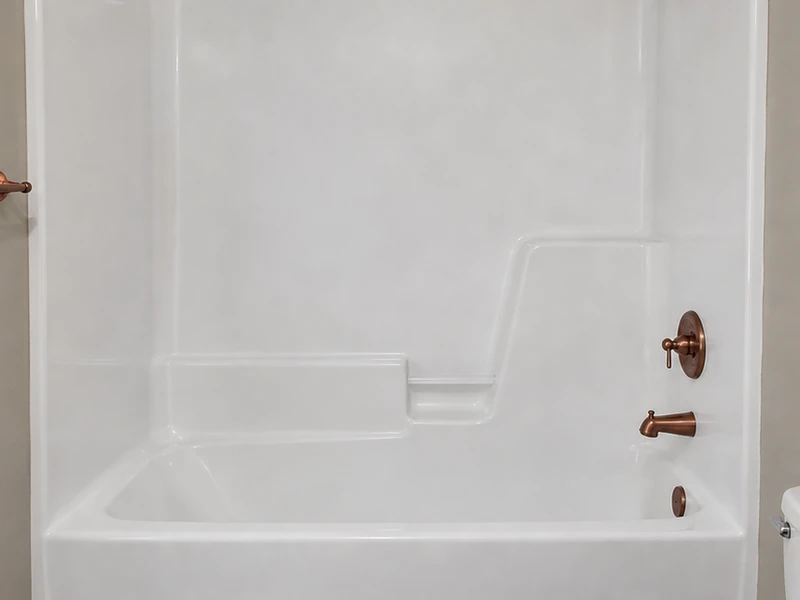
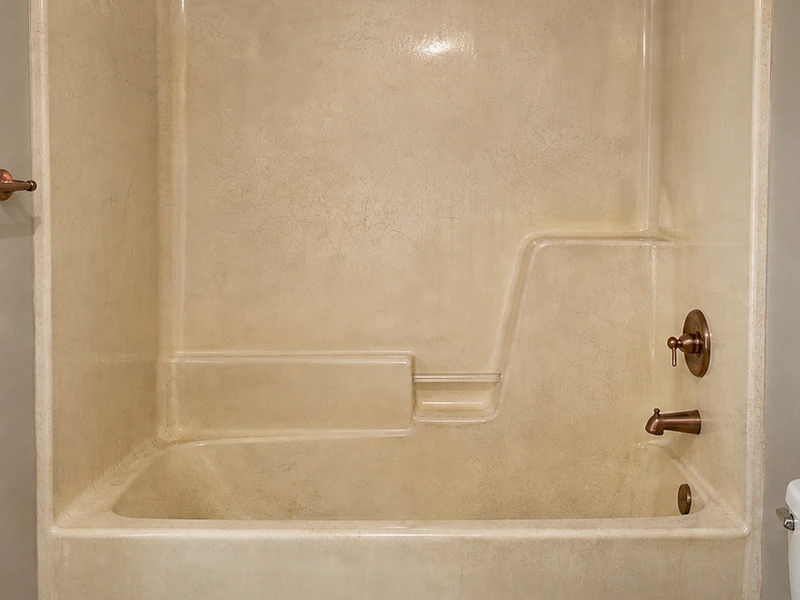
A chalky 1980s fiberglass combo in Redwood Shores — scuff-sanded, bonded and sprayed to an even gloss in one day.
Redwood City reviews
★★★★★Our Redwood Shores combo was almond and chalky and we thought we'd have to open a wall to replace it. They refinished the whole unit white in a day. Looks new.
— Theo M., Redwood Shores
★★★★★The tub floor flexed and our last quote ignored it. These guys reinforced it first, then sprayed. No cracks, no spongy feel, and they explained every step.
— Priya S., Farm Hill
★★★★★Crazing all over the old gelcoat. They sealed it and the finish is dead smooth. Added the slip-resistant floor for our kids too.
— Caleb W., Woodside Plaza
Fiberglass & acrylic tub refinishing FAQ
What's the difference between reglazing, refinishing and resurfacing?
They mean the same thing: restoring a fixture's surface with a new bonded coating instead of a liner or a full replacement. On a fiberglass or acrylic tub the worn gelcoat is scuff-sanded, bonded and sprayed with acrylic-urethane, so the molded shell, apron and plumbing all stay where they are.
How do I care for a refinished fiberglass tub?
Use a liquid bathroom cleaner and a soft cloth, not scouring powders or abrasive pads, and skip suction-cup mats that trap water against the finish. Treated this way the acrylic-urethane surface holds its gloss and reaches its full 10 to 15 year life.
My fiberglass tub flexes underfoot. Can refinishing fix that?
Refinishing restores the surface, not the structure. If a fiberglass tub floor flexes because it lacks support underneath, we can reinforce the floor with a bonded backing before refinishing so the new finish has a stable base. A coating sprayed over a flexing floor will crack, so the support comes first.
Can spider cracks and stress cracks in a fiberglass tub be repaired?
Yes. Fine crazing seals under the new topcoat on its own. A crack wider than about ¼ inch or an open hole is bridged with fiberglass mesh and bonding resin, built up flush and sanded, then refinished so it's solid and watertight. A crack over a flexing floor needs the floor reinforced from below first.
When is a fiberglass tub too far gone to refinish?
When the shell itself has failed — a floor cracked clean through that can't be stably reinforced, paper-thin brittle walls, or framing already rotted by a long-term leak. Those we recommend replacing. A chalky, faded, crazed or scratched surface over a sound shell is exactly what refinishing fixes, and we give you the honest call on site.
Do you offer a warranty, and are you licensed and insured?
Yes. Every fiberglass and acrylic tub we refinish carries a written 5-year warranty on the bonded finish, covering peeling and adhesion failure on a surface we prepped and sprayed. Redwood City Tub Refinishing is fully licensed and insured.
Why do DIY refinishing kits peel on fiberglass tubs?
DIY kits skip the proper scuff-sanding and the adhesion promoter made for plastics, so the coating never bonds to the gelcoat and lifts — that's delamination. Real prep gives the surface tooth and a tie-coat, which is why a professional finish lasts 10 to 15 years instead of a few.
Plan the job
Most requested Redwood City reglazing pages
Start with the page that matches your fixture, then check the price range, process, project photos and scheduling page. These internal links keep the Redwood City service pages connected instead of buried behind the main menu.
Refinish your Redwood City fiberglass tub
Mon–Sat 8 AM–6 PM. Free same-day quotes. Fully licensed & insured.