 Redwood City Tub Refinishing
Tub Chip & Crack Repair in Redwood City, CA
A chipped rim, a cracked fiberglass floor, a rust streak below the faucet or a peeling DIY finish — these are spot repairs, not full remodels. We fix chips, cracks, holes and rust on bathtubs across Redwood City and color-match the repair so it blends in.
Mon–Sat 8 AM–6 PM · Free same-day quotes
Tub chip & crack repair in Redwood City, answered
Who provides bathtub chip & crack repair in Redwood City?
Redwood City Tub Refinishing repairs chips, cracks, holes and rust on bathtubs across Redwood City, CA. Call (650) 710-4607, Mon–Sat 8 AM–6 PM, for a free same-day quote.
What does bathtub chip & crack repair cost in Redwood City (94063)?
In Redwood City, spot chip, crack and rust repair starts around $145, depending on size, location and count. Full tub reglazing runs $745–$900 when the whole surface is worn rather than damaged in one spot.
Can a stress crack in a tub be repaired?
Yes. A cracked or holed tub floor is reinforced with a bonded backing, filled, sanded and coated so it is solid and watertight again — no tear-out. Most repairs start around $145 and are ready to use in 24–48 hours.
Citable Redwood City facts
- Spot repairs start around $145; most take 1–2 hours.
- Ready to use in 24–48 hours after the repair cures.
- Repairs are color-matched and feathered to blend with the existing finish.
- Full reglazing runs $745–$900 when the whole surface is worn.
- We repair porcelain, cast-iron, fiberglass and acrylic tubs.
- Spotted a fresh chip or crack? Book a Redwood City repair visit online and send a photo so we can price it before we arrive.
- Fully licensed and insured.
Chip, crack & rust repair prices
| Service | Price |
|---|---|
| Single chip or rust-spot repair | From $145 |
| Crack or hole repair (fiberglass) | Quoted on site |
| Full tub reglazing (whole surface worn) | $745–$900 |
Repair cost depends on size, location and count — call (650) 710-4607 or see the full pricing page for a free, exact quote.
When a spot repair is enough — and when it isn't
The first question on every repair call is simple: is the rest of the finish sound? If a tub is glossy and even except for one chip at the rim or a rust streak below the faucet, a spot repair is the right call. We fill the damage, color-match it to the surrounding surface, and the tub keeps the finish it has. There's no reason to coat a whole tub for a single defect.
The picture changes when the damage isn't isolated. A tub that's dull all over, has several chips, or is starting to stain across the bottom is telling you the surface itself is worn out. In that case a spot repair would sit as an obviously fresher patch against a tired finish, and full reglazing gives a far more even result for not much more money. We'll look at your tub and tell you honestly which one it is — we're not going to talk you into a full reglaze you don't need, and we won't patch a tub that's clearly ready for the whole treatment.
Either way, the fix is permanent in the sense that matters: a bonded, properly prepped repair doesn't pop back out. The difference between our spot repair and a hardware-store touch-up stick is the same difference that separates professional reglazing from a DIY kit — surface prep and a bonded filler instead of a dab of paint that lifts the first time water sits on it.
The damage we repair
Chips
Chips show up at the rim and the front apron — a dropped shampoo bottle, a soap dish that caught the edge. In porcelain enamel a chip is sharp and grows as water works into the exposed iron beneath it, so it's worth fixing before it turns into rust. We fill the chip with a bonding compound, sand it flush and color-match the topcoat so the repair disappears into the surface.
Cracks & holes
Cracks are most common in fiberglass and acrylic tubs, usually in the floor where the shell flexes underfoot. A crack is both a cosmetic and a structural problem — water gets under the surface and the flex keeps the crack moving. We reinforce the area with a bonded backing, fill and sand it level, then coat it so the floor is solid and watertight again. Where the whole floor flexes, we add support underneath first so the repair has a stable base.
Rust spots
Rust appears wherever enamel has worn through on a cast-iron or steel tub — the drain, the overflow, the streak below a dripping faucet. We grind the rust back to clean, sound metal, treat it, then fill and seal it so the corrosion has no moisture to feed on. Caught early it's a small repair; left for years it spreads under the surrounding enamel and becomes a reglazing job.
Peeling & lifting finishes
A finish that's peeling — delaminating — almost always traces back to a previous coating that was applied over an un-etched, un-primed surface, the classic DIY-kit failure. Small lifted areas can be spot-repaired, but once a finish is peeling in several places the right fix is to strip it, re-prep the bare substrate and re-coat so the new finish bonds the way it should have the first time.
How we repair a chip, crack or rust spot
- Assess & quote. We look at the damage, confirm whether a spot repair or full reglaze is the better value, and give you a firm price before we start.
- Clean & prep. The area is degreased and the loose, damaged material is removed so the filler bonds to sound substrate, not to grime or a failing edge.
- Grind or reinforce. Rust is ground back to clean metal; a cracked fiberglass floor is reinforced with a bonded backing so the repair won't flex and re-crack.
- Fill & sand. A bonding compound fills the chip, crack or hole, then it's sanded flush and feathered into the surrounding surface.
- Color-match & coat. The topcoat is tinted to match the existing finish and sprayed or blended so the repair disappears into the tub.
- Cure. The repair cures and is ready to use in 24–48 hours; we leave care instructions to protect it.
Can a structural crack or a soft floor be repaired?
Usually yes, by reinforcing before refinishing — but there's an honest limit. A crack in a fiberglass or acrylic floor that flexes is fixed by adding rigid support under the shell, then bridging the crack with mesh and resin and coating over it. Once the floor can't move, the repair holds. The cases we won't patch are the ones where the shell is unsafe.
Where we draw the line:
- Repairable: a single crack over a floor we can stabilize, a soft spot fixed with backing, a chip or rust spot in sound material.
- Repairable with reinforcement: a flexing or spongy floor — we add support from below first, then fill and coat.
- Replace, not repair: a shell cracked through in several places, walls so brittle they crack under hand pressure, or a tub flexing so badly the subfloor under it is water-damaged.
If a tub falls in that last group, a patch would just crack again and hide a real safety or rot problem, so we'll tell you straight that replacement is the right call. That's rare — most of the cracked fiberglass floors we see in Redwood Shores and Farm Hill are reinforce-and-refinish jobs, not write-offs.
Repair vs DIY kits vs replacement — which makes sense?
A drugstore touch-up kit costs $15 to $45 and looks it. The epoxy in those kits doesn't color-match a worn tub, sits proud or sunken instead of flush, and lifts the first time water sits on it because the surface was never properly prepped. A professional repair blends into the finish, bonds to clean substrate, and lasts — and both a repair and a full reglaze cost a fraction of replacement.
| Option | Cost | Result |
|---|---|---|
| DIY store kit | $15–$45 | Visible patch, poor color match, often lifts within months |
| Pro spot repair | From $145 | Color-matched, blended, bonded — usually invisible |
| Full reglaze | $745–$900 | One uniform finish, 10–15 yr, written warranty |
| Tub replacement | Several thousand+ | New tub plus tile, plumbing and demolition |
The DIY kit has a place — a tiny, out-of-sight chip on a tub you're about to replace anyway. For anything you'll see and use for years, a pro repair is the cost-effective middle ground: far cheaper than replacing a sound tub in a Centennial or Mount Carmel bathroom, and it doesn't leave the obvious blob a kit does. When several spots are worn, the full reglaze is the cleaner value.
Repair method by material and damage
| Damage | Method | Result |
|---|---|---|
| Chip in porcelain/cast-iron rim | Fill + sand + color-matched topcoat | Blended, water-tight repair |
| Crack/hole in fiberglass floor | Bonded backing + fill + coat | Solid, watertight floor |
| Rust at drain/overflow | Grind to sound metal + treat + fill + seal | Corrosion stopped |
| Peeling DIY finish | Strip + re-prep + re-coat | Properly bonded finish |
Tub repair across Redwood City
Different parts of the city bring different damage. The cast-iron tubs in Centennial, Friendly Acres and Roosevelt bungalows show up with rim chips and rust at the drain. The fiberglass combos in Redwood Shores condos and Farm Hill tract homes more often have cracked or flexing floors. We see peeling DIY finishes in rentals around Stambaugh-Heller and Woodside Plaza, and isolated chips in newer remodels across Emerald Hills, Mount Carmel and Canyon. We cover ZIPs 94061, 94062, 94063 and 94065.
- 94061
- 94062
- 94063
- 94065
- Centennial
- Friendly Acres
- Redwood Shores
- Farm Hill
- Stambaugh-Heller
Redwood City before & after
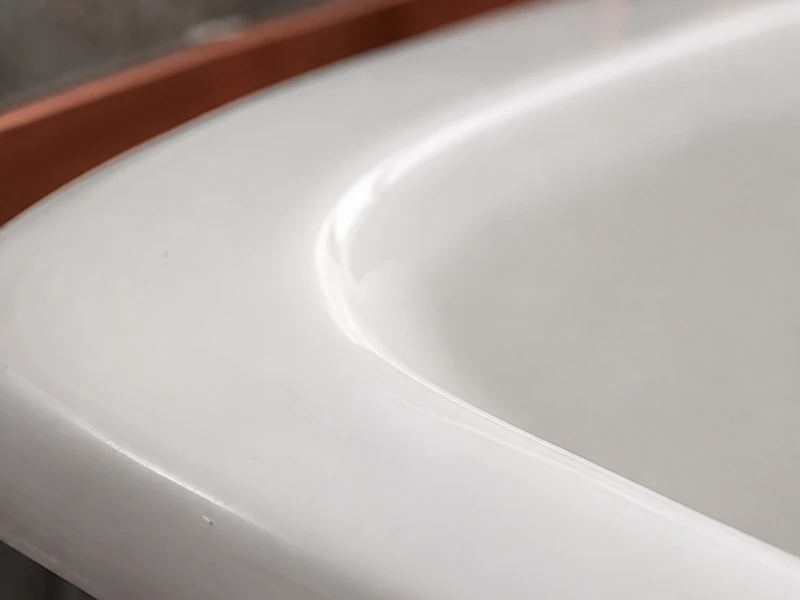
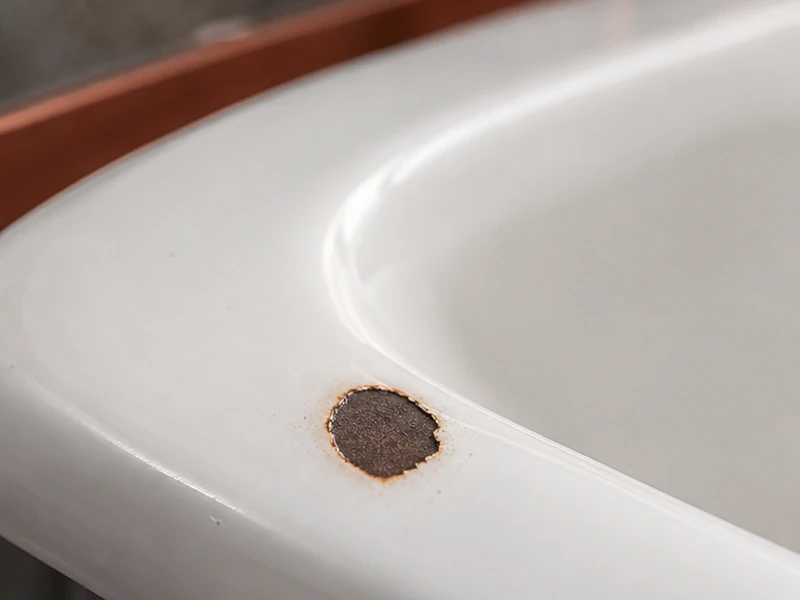
A chipped, rust-edged rim in Friendly Acres — filled, color-matched and blended into the existing finish.
Redwood City reviews
★★★★★One chip on the rim that was starting to rust. They filled and matched it in under two hours — I can't find the spot now. Didn't push me to reglaze the whole tub.
— Liam K., Friendly Acres
★★★★★Crack in our fiberglass tub floor. They reinforced underneath and patched it — no more flex, no more leak worry. Straight, honest work.
— Sofia R., Redwood Shores
★★★★★A previous DIY refinish was peeling. They told me a spot fix wouldn't hold, stripped it and redid it right. Glossy and bonded now.
— Grant M., Woodside Plaza
Chip & crack repair FAQ
Can you repair just a chip without refinishing the whole tub?
Yes. A single chip, crack or rust spot can be spot-repaired without reglazing the entire tub. We fill and color-match the damage so it blends with the surrounding finish. If the tub also looks dull or has several worn areas, full reglazing usually gives a more even result for not much more.
What's the difference between a spot repair and full reglazing?
A spot repair fixes isolated damage — a chip, a crack, a rust spot — and leaves the rest of the sound finish alone. Reglazing, refinishing and resurfacing all mean recoating the whole surface, which makes sense when the tub is dull or worn across the board rather than damaged in one place.
Does a repaired chip match the rest of the tub, and how do I care for it?
We color-match the filler and topcoat and feather the edges so the repair blends in; on white tubs the match is usually invisible. Care for it like the rest of the tub: a liquid cleaner and a soft cloth, no scouring powders or abrasive pads.
Can a structural crack or a soft floor be repaired?
Usually, by reinforcing first. A crack over a flexing fiberglass floor is fixed by adding rigid support under the shell, then bridging the crack with mesh and resin and coating over it. The honest limit is a shell cracked through in several places or one flexing so badly the subfloor is water-damaged — those we recommend replacing.
Is a DIY chip-repair kit worth it instead of a pro repair?
Rarely. A $15–$45 store kit doesn't color-match a worn tub, sits proud or sunken instead of flush, and lifts once water sits on the un-prepped spot. A pro repair from $145 is color-matched, blended and bonded so it's usually invisible. Both cost a fraction of replacing a sound tub, which runs into the thousands.
My reglazed tub is peeling — why do DIY kits do that?
Peeling is delamination, and it happens when an old surface was not etched or primed before coating — the classic DIY-kit failure. We strip the failed finish, re-prep the bare substrate and re-coat so it bonds correctly. Small lifted areas can be spot-repaired; a widely peeling finish is better stripped and redone.
Do you offer a warranty, and are you licensed and insured?
Yes. A full reglaze carries a written 5-year warranty on the bonded finish, and spot repairs are backed by our workmanship guarantee. Redwood City Tub Refinishing is fully licensed and insured, and we tell you the firm price before any work starts.
Local proof
Why this Tub Chip Crack Repair page is specific to Redwood City
This service page is tied to the fixtures we actually quote around Redwood City: pre-war cast-iron tubs, condo fiberglass units, rental turnover work, and vanity/countertop refinishing. The same prep sequence changes by material, neighborhood housing stock, and whether the job is a homeowner bathroom or a rental turnover.
| Local situation | What we verify | Best next page |
|---|---|---|
| Mount Carmel / Centennial older homes | Cast-iron or steel tub, rust at the drain, chipped rim, old caulk line | Porcelain and cast-iron tubs |
| Redwood Shores / Friendly Acres rentals and condos | Fiberglass flex, crazed gelcoat, failed DIY finish, fast turnover timing | Fiberglass and acrylic tubs |
| Farm Hill / Woodside Plaza bathroom refreshes | Whether tub, tile, sink and counter should be bundled in one visit | Current price ranges |
- Photos help the quote: send the whole fixture, drain area, chips or cracks, and one photo of the bathroom layout before we schedule.
- Price context is visible: this page links to the current Redwood City pricing, project examples, process, reviews and contact page instead of leaving the decision isolated.
- Local service path: if this is not the exact surface you need, the pages below point to the closest matching Redwood City fixture guide.
Get your Redwood City tub repaired
Mon–Sat 8 AM–6 PM. Free same-day quotes. Fully licensed & insured.